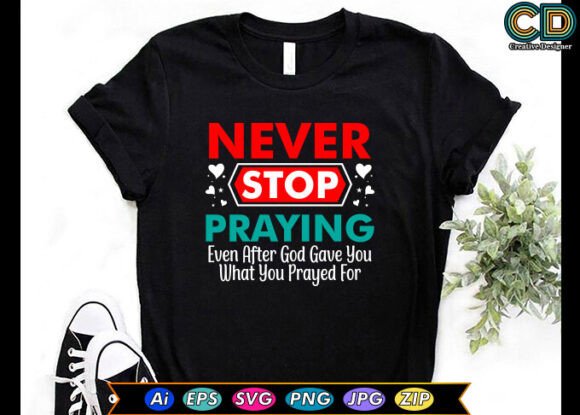
NEVER STOP PRAYING: A Designer's Review for Embroidery
As a designer who regularly evaluates embroidery files for real projects, my first instinct with a design like NEVER STOP PRAYING Christian T-shirt is to picture it stitched out on fabric. It’s not just a graphic; it’s a sentiment waiting to be translated into thread. The core message—NEVER STOP PRAYING EVEN AFTER GOD GAVE YOU WHAT YOU PRAYED FOR—immediately sets a tone of gratitude and perseverance. This isn’t a loud, decorative piece; it’s a quiet, meaningful statement. The visual personality leans towards clean, text-focused presentation, which for an embroidery designer signals a project centered on clarity and readability rather than intricate pictorial detail.
The Mood It Creates on Fabric
Imagine you’re preparing a custom embroidered sweatshirt for a client who wants a gift for a loved one celebrating a milestone. This design wouldn’t scream for attention; it would invite reflection. When stitched out, the text becomes the entire focal point. The mood is contemplative, encouraging, and deeply personal. It feels suited for projects where the message itself is the decoration—think of a simple, well-made tote bag for a bible study group, a subtle patch on a denim jacket, or a centered design on a kitchen towel for a faith-based home. Its power comes from its directness.
Where This Design Performs Best in Real Projects
In practical embroidery situations, text-based designs like this one have clear strengths. I’ve found they excel on stable, medium-weight fabrics where lettering stays crisp. A cotton sweatshirt, a canvas tote bag, or a linen apron would be ideal canvases. For a small business owner creating boutique merchandise, this file could anchor a simple product line: a series of embroidered pillow covers or tea towels with inspirational phrases. For personalized gifts, like a wedding gift for a faith-centered couple or a baby blanket for a nursery, the message adds a layer of heartfelt intention beyond just a cute pattern.
It’s also a strong candidate for creating embroidered patches. The text-focused layout means it can be rendered effectively in a smaller hoop size for a patch application, which could then be applied to caps, bags, or jackets. For Etsy sellers and craft fair vendors, a clean, well-stitched version of this on a high-quality garment elevates it from a simple graphic to a valuable handmade product. The professionalism comes from the execution—sharp stitches, good thread contrast, and careful placement.
Careful Considerations for Stitching Success
While the design’s simplicity is an asset, it also demands attention to detail. Tiny lettering, if present in the actual embroidery file, can be a challenge on textured or stretchy fabrics. You’d need to be meticulous with stabilizer choice, especially for t-shirts or thinner fabrics where stitch density might cause puckering. On curved surfaces like caps, the linear layout might need slight adjustments in positioning to look balanced.
Dark fabric backgrounds require thoughtful thread color planning—a white or light-colored satin stitch for the text would pop, but you must ensure the stitch density is sufficient to prevent the base fabric from showing through and muddying the message. This is where testing on scrap fabric first becomes non-negotiable. Run a test on both a light and dark piece of your intended material. Check the clarity of every word, the sharpness of corners in the lettering, and how the fill stitches or running stitches behave.
How It Impacts Your Product and Customer
From a commercial and creative entrepreneur perspective, a well-executed NEVER STOP PRAYING embroidery elevates product value through perceived craftsmanship. Customers looking for faith-based apparel or gifts connect with authenticity; a clean, handmade embroidery presentation builds trust more than a mass-produced vinyl print. For brand consistency, if your small shop focuses on uplifting or Christian-themed products, this design fits seamlessly into that collection, enhancing your niche.
Its giftability is high because the message is timeless and personal. Recognition is instant—the phrase is clear and impactful. Buyer engagement comes from the emotional resonance, not just visual flair. They’re buying the meaning, and your embroidery work delivers that meaning with tangible quality.
Practical Notes for the Working Designer
Before committing this to a client project or your own merchandise, treat it like any critical design asset. I always recommend a black and white digital mockup on a product photo to visualize contrast. Confirm the actual hoop size you’ll need based on the provided file dimensions—don’t assume. Inspect the small details in the editable vector files (the SVG and AI formats mentioned are crucial for this); look for any overlapping paths or overly thin lines that might not translate well to stitches.
Thread color contrast is king. Plan your palette around the fabric. Remember, this design, being a graphic file provided for crafts, likely needs you to determine the stitch types—whether areas are meant for satin stitch or fill stitch. The provided high-quality JPG is great for printable mockups and digital product previews, but the editable files are your true workspace.
Finally, a recurring note for commercial embroidery and digital product sellers: always confirm the licensing terms for the design file itself before selling finished items. The product description notes it’s a graphics file, but understanding your rights to use it for commercial embroidery projects is a fundamental step. It protects your business and respects the original designer.
The Final Impression: A Design with Purpose
The NEVER STOP PRAYING Christian T-shirt design file, in essence, is a tool for creating products with purpose. Its real-world application shines in projects where the message is the centerpiece. It won’t overwhelm a baby garment with dense stitches, but it could become a cherished detail on a blanket. It might not be for a flashy holiday gift, but for a daily reminder on a kitchen towel or a cap. As a designer reviewing it for real use, I see its value in its straightforward emotional appeal. Success hinges on your skill in translating that digital file into impeccable stitches—choosing the right fabric, the right stabilizer, and the right project context. When done thoughtfully, it becomes more than an embroidery; it becomes a beautifully crafted statement.