Oh Honey I Am That Nana: A Designer's Hands-On Review
First Impressions: It’s Not Just Sweet, It’s Sass
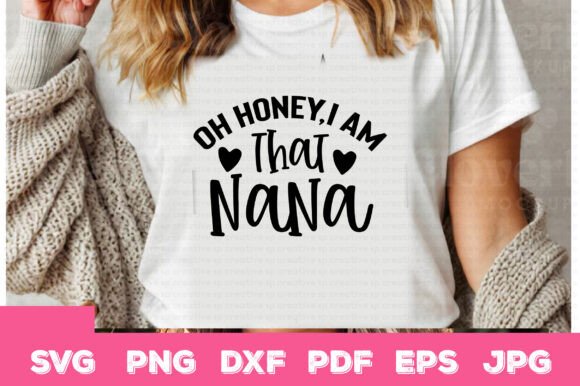
When you open an embroidery file called Oh Honey I Am That Nana, you expect a certain sentiment. What you get here, however, is personality. This isn't a demure, floral grandma design. The theme, layout, and wording immediately suggest a confident, playful, and modern "Nana" identity. It creates a mood of affectionate pride and humor, perfect for a generation of grandmothers who are active, stylish, and fully embracing their role. The visual personality feels like it belongs on items meant to be worn or displayed with a smile, not tucked away in a drawer. For an embroidery project, this naturally leans towards gifts and products with a personal, celebratory touch.
The Perfect Project Fit: From Totes to Tees
My first instinct when evaluating a design is to picture it stitched. For Oh Honey I Am That Nana, I immediately envisioned a custom embroidered tote bag. A tote is a practical, everyday item a Nana might carry, and this design would turn it into a statement piece. The scale and layout would center well on a bag panel, creating a focal point that’s both functional and sentimental.
Beyond totes, this design performs beautifully across a range of real-life embroidery situations. On a sweatshirt or hoodie, it becomes a cozy, proud declaration. For baby clothes or nursery decor, it’s a charming label from a doting grandmother. As an embroidered patch, it could be applied to a cap, apron, or pillow cover, adding a personalized touch. It’s also ideal for kitchen towels or holiday gifts—think Mother’s Day or Christmas presents that acknowledge a special family role. For small business merchandise, like items in a boutique or at a craft fair, this design adds a ready-made, relatable charm that customers connect with.
A Real-Life Scenario: The Boutique Sweatshirt
Let’s walk through a practical use case. Imagine you’re an Etsy seller preparing a limited-run sweatshirt for your shop. You choose a high-quality, neutral-colored sweatshirt. You load Oh Honey I Am That Nana and stitch it out. The finished product isn't just apparel; it’s a story. The visual appeal hinges on stitching clarity—clean lettering and well-defined elements are crucial. This design, with its clear message, enhances the product’s perceived value. It feels like a handmade product with thought behind it, which builds customer trust and engagement. A buyer isn’t just purchasing a sweatshirt; they’re buying a gift for their mom or a piece of identity for themselves. That giftability and immediate recognition are powerful for a creative entrepreneur.
Where to Use With Care: Navigating the Stitching Details
Every design has its considerations. With this one, the primary focus is on the text and layout density. While the product description mentions use for shirts, mugs, and decals, for machine embroidery, we need to think tactically.
If the design contains small, intricate lettering or dense decorative accents, you should be cautious on small hoop sizes or highly textured fabrics. Stretchy fabric or thin fabric like lightweight tees will require excellent stabilizer to prevent puckering, especially if there are areas of satin stitch or fill stitch. Embroidering on dark fabric demands careful thread color contrast planning to ensure the message pops. Similarly, on curved surfaces like caps, the layout must be tested to ensure it sits correctly without distortion.
The key is the stitch density. A design meant to be bold and clear might have areas that are too dense for delicate fabrics. Always test on a scrap of your intended fabric first. This is not a design I would automatically run on a fine baby blanket without checking how the stitch density interacts with the knit.
Elevating Your Craft Business with This Design
From a commercial perspective, Oh Honey I Am That Nana is a versatile design asset. For a digital product seller, it could be part of a bundle for grandmother-themed projects. For an apparel decorator, it’s a ready-to-use option for personalized orders. Its strength is in its straightforward, emotionally resonant message, which aids in brand consistency for shops focusing on family, humor, or milestone celebrations.
The professionalism of your finished product will depend entirely on your execution. Using proper techniques ensures the design’s intent is preserved. This affects buyer engagement significantly—a crisp, well-embroidered version on a mockup photo sells far better than a poorly rendered one.
Practical Designer Notes Before You Hoop
Before you commit this design to a client project or your shop inventory, here’s my checklist:
- Test on scrap fabric first. Use the same material and color as your final product.
- Check thread color contrast. Run a small section in your chosen colors on both light and dark background scraps.
- Review the stitch density by looking at the file preview. Are there extremely dense areas that might challenge your machine or fabric?
- Confirm your hoop size can accommodate the design without needing excessive resizing.
- Inspect small details. Are there tiny corners or decorative elements that might need adjustment for clarity?
- Use proper stabilizer. Match the stabilizer to your fabric type—don’t skip this step.
- Consider creating black and white mockups to see how the design reads purely as shape and contrast.
- Most importantly, check whether the design works for both personal and commercial projects. The product description lists various uses, but you must confirm the licensing terms before selling finished items. If exact license details aren't provided in the listing, it’s essential to verify them before proceeding with commercial embroidery.
Final Thoughts: More Than a Graphic
Oh Honey I Am That Nana transcends being just a graphics file in the crafts category. When thoughtfully applied, it becomes a centerpiece of a personalized gift or a standout item in small shop merchandise. Its value lies in its ability to connect with a specific, loving sentiment in a modern way. For embroidery designers and makers, the real work is in pairing this design with the right project, fabric, and technique to let that personality shine through every stitch. Approach it with practical preparation, and you’ll have a finished product that truly says, “Oh Honey,” with confidence.