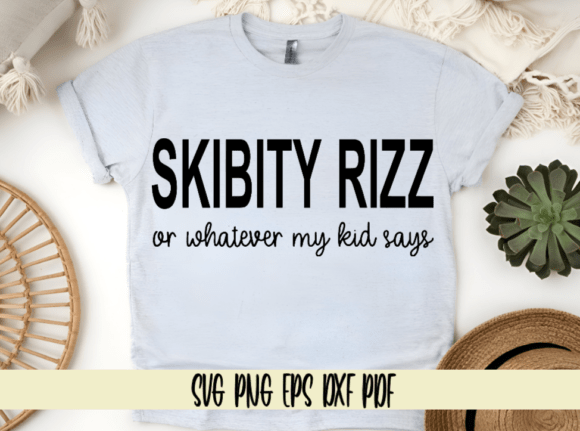
A Fresh Embroidered Joke for Modern Crafts
Let’s get real about the 'SKIBITY RIZZ or Whatever My Kid Says' design. It’s not a design I’d pick for a formal corporate logo, but that’s precisely its strength. When I opened the embroidery file, my first thought was: this is for the joyful, slightly chaotic, and utterly relatable side of handmade products. The playful, meme-inspired wording and its graphic treatment immediately create a mood of lighthearted humor. It feels contemporary, a bit quirky, and connects with a specific, knowing audience—likely parents, caregivers, or anyone who finds the ever-evolving slang of younger generations both baffling and hilarious.
Where This Design Thrives in Real Projects
The visual personality of 'SKIBITY RIZZ or Whatever My Kid Says' is casual and bold. This isn’t a tiny, delicate script. It’s a statement. For embroidery, that means it belongs on items where the joke can be central and appreciated. I immediately pictured it on a cozy, everyday sweatshirt or a sturdy canvas tote bag—items worn or used by someone who wants to express that fun, insider vibe. It would be a perfect personalized gift for a friend who’s deep in the parenting trenches, or as a standout piece in a small shop selling modern, conversation-starting apparel.
Think about practical application. Embroidered on the front of a soft cotton sweatshirt, with good thread color contrast against a heather grey or pastel background, it becomes a wearable piece of humor. On a tote bag, it turns a functional item into a personality-packed accessory. For a craft business or Etsy seller, this design could anchor a whole line of “parenting humor” or “modern slang” products, from baby onesies (for the ironic baby gift) to apron pockets and kitchen towels. The design’s layout and detail level suggest it would stitch out cleanly as a medium-to-large motif, making it a great choice for products where clarity and readability are key to the joke landing.
Scenarios Where Caution is Your Best Friend
While the design feels robust, an experienced embroiderer knows to think about the edges. Its success depends on context. On very small hoop sizes, the lettering might lose its impact and become cramped. Stitching it onto thin or stretchy fabrics without the right stabilizer could lead to distortion, muddying the punchline. I’d be careful with dense stitch areas if the file has large fill stitch blocks; testing on scrap fabric first is non-negotiable to check puckering.
Dark fabric backgrounds require a smart thread choice—perhaps a bright, contrasting satin stitch for the main text to ensure it pops. Applying it to curved surfaces like caps needs forethought; the layout must be adapted so it doesn’t wrap awkwardly around the seam. And for products destined for frequent washing, like baby clothes or tea towels, a clean stitch execution and secure threads are vital for longevity. This design, when stitched well, adds value through its humor and relevance, building customer trust because it feels authentic and well-made.
The Professional’s Eye on Stitching and Selling
From a commercial embroidery and craft business perspective, 'SKIBITY RIZZ or Whatever My Kid Says' affects several key areas. Its visual appeal is its niche appeal—it won’t be for everyone, but for its target audience, it’s highly engaging. This specificity can be a boon for brand consistency if your shop leans into contemporary, humorous gifts. For an Etsy seller, it offers a ready-made concept for printable mockups and digital product previews, helping buyers visualize the finished product on a sweatshirt or tote immediately.
Stitching clarity is paramount here. The joke only works if it’s readable. Before running a production batch, I would always test the embroidery file on both light and dark fabric backgrounds, checking small details and lettering clarity. A quick test in a black and white digital mockup can also help visualize contrast. Using proper stabilizer for the chosen fabric texture will preserve the design’s clean edges, whether it’s on apparel or a decorative pillow cover.
Essential Designer Notes Before You Hoop Up
Here’s my practical checklist for using this graphics design in real projects. First, always confirm the specifics provided with the digital embroidery file. The product description mentions availability in multiple formats, but you must check which ones you actually have and their compatibility with your machine. Review the implied stitch density from the preview—does it look like it uses large fill stitches or more running stitch outlines? This influences fabric choice.
Critically, check the licensing terms before selling any finished items or commercial embroidery projects. You need clear permission to use the design for handmade products you intend to sell. This protects your business and respects the designer. Then, hoop your test. Match your thread colors to create maximum contrast for readability. Inspect the stitched result for any tiny, potentially problematic corners in the lettering. Finally, judge its scale. Does it look best as a large, central motif on a sweatshirt, or could it work as a smaller, applique-inspired patch on a baby blanket? Your test piece will tell you.
When executed thoughtfully, 'SKIBITY RIZZ or Whatever My Kid Says' transforms from a simple digital graphics file into a charming, conversation-starting embroidered product. It brings a slice of modern, relatable life into the craft, and for the right maker and the right customer, that’s exactly where its value lies.